A comprehensive guide to choosing the right machinery for your gold deposit type – from crushing circuits to wash plants.
Gold mining is not a one-size-fits-all operation. The equipment you choose depends fundamentally on the nature of your deposit. Are you targeting ancient veins embedded in solid rock, or loose gold particles in a riverbed? This guide breaks down the distinct processing lines for hard rock (lode) gold and placer (alluvial) gold, helping you make an informed investment.
Quick comparison: Hard rock vs. Placer
| Parameter | Hard Rock (Lode) Gold | Placer (Alluvial) Gold |
|---|---|---|
| Deposit Nature | Gold locked in solid rock (veins, quartz). Requires crushing. | Free gold particles mixed with sand, gravel, clay. Usually loose. |
| Gold Size & Shape | Often microscopic or fine, but can be coarse. Encapsulated. | Ranges from fine flour gold to nuggets. Liberated by nature. |
| Main Processing Goal | Liberate gold from rock → concentrate → recover. | Separate gold from gangue by density/gravity. |
| Core Equipment | Crushers, mills, classifiers, flotation cells, cyanidation tanks, CIL/CIP. | Screens, trommels, sluices, jigs, centrifuges, shaking tables. |
| Waste Handling | Tailings (slurry) management, often toxic if cyanide used. | Gravel stacks, minimal chemicals; more eco-friendly. |
⛏️ Hard Rock (Lode) Gold Processing
Hard rock gold, also known as vein gold, is embedded in solid rock formations such as quartz, granite, or greenstone. It requires size reduction to physically release the gold particles before concentration. This is the most common type of primary gold deposit and usually demands a more complex, energy‑intensive flowsheet.
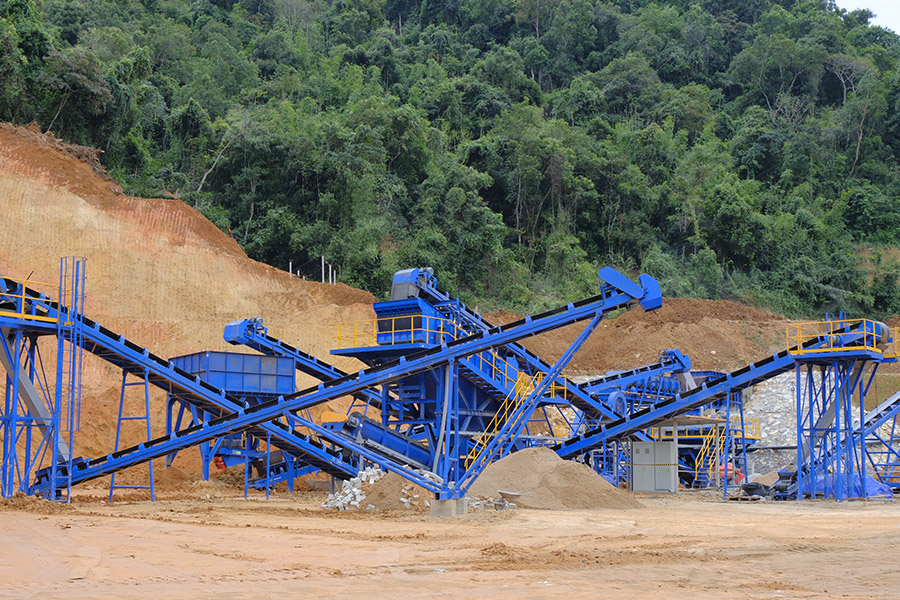
Typical Hard Rock Processing Flow & Equipment
1. Primary Crushing
Jaw crushers or gyratory crushers reduce run‑of‑mine ore (often up to 600mm) to 100‑150mm. High‑capacity, robust machines.
2. Secondary/Tertiary Crushing
Cone crushers or impact crushers further reduce ore to 10‑30mm. Often combined with screens to close the circuit.
3. Grinding / Milling
Ball mills or rod mills in closed circuit with hydrocyclones produce a fine slurry (typically 70‑80% passing 75µm). Critical for liberation.
4. Classification
Hydrocyclones separate fine material for downstream processing; coarse particles return to the mill.
5. Concentration
Gravity concentrators (e.g., Knelson, Falcon) recover free coarse gold early. Flotation cells collect sulfide‑associated gold.
6. Leaching / CIL/CIP
Leaching tanks with cyanide dissolve fine gold. CIL/CIP uses carbon to adsorb gold from pulp. Electrowinning & smelting produce doré bars.
✅ Pros of Hard Rock Processing
- High‑grade deposits can be extremely profitable.
- Well‑established technologies (scalable from 1 tph to 1000s tph).
- Often co‑produce other metals (silver, copper).
- Suitable for deep, long‑life mines.
❌ Cons & Challenges
- High capital investment (crushing & grinding circuits).
- Significant energy consumption.
- Requires skilled operators & maintenance.
- Potential environmental concerns (cyanide, tailings dams).
🌊 Placer (Alluvial) Gold Processing
Placer gold forms when weathering releases gold from rock, and water transports and concentrates it in streams, beaches, or ancient terraces. Gold particles are already liberated, so no crushing or milling is required. Processing relies entirely on gravity separation due to gold's high density (19.3 g/cm³).
Typical Placer Gold Processing Flow & Equipment
1. Washing & Scrubbing
Trommel screens or log washers break down clay and wash away light organics. Critical for avoiding gold loss in sticky material.
2. Screening / Classification
Vibrating screens or rotary trommels remove oversize gravel (+6mm to +20mm) which is usually waste.
3. Primary Gravity Concentration
Jigs (especially duplex or Yuba type) recover coarse gold and nuggets. Slurry pumps feed downstream units.
4. Fine Gold Recovery
Centrifugal concentrators (Knelson, Falcon) capture fine gold. Shaking tables produce high‑grade concentrates.
5. Final Upgrading
Mercury amalgamation (now discouraged) or direct smelting of concentrates. Many modern plants use shaking tables + retorts.
✅ Pros of Placer Processing
- Lower capital and operational costs (no crushing/milling).
- Environmentally friendlier (no chemicals, simple water recycling).
- Fast setup and modular plants available.
- Visible gold recovery – easy to monitor.
❌ Cons & Challenges
- Resource is often shallow and short‑lived.
- Highly dependent on water availability.
- Less effective for very fine gold (<50µm) without special equipment.
- Seasonal operation in cold climates.
⚖️ How to Choose: Hard Rock or Placer Line?
Ask these four questions before buying equipment:
- 1. What is your ore type? If you see quartz veins or sulfides → Hard rock. If sand/gravel with visible gold in a watercourse → Placer.
- 2. What is your production scale? Hard rock plants are capital intensive, but for >100 tpd they are economic. Placer plants can be profitable even at 5‑20 tpd with low operating costs.
- 3. What’s your water situation? Placer absolutely needs water. Hard rock can operate with less but needs water for grinding/leaching.
- 4. Environmental regulations? Placer usually has simpler permits (no chemicals). Hard rock may require cyanide management plans.
🔄 Hybrid & Custom Solutions
Some operations combine both philosophies. For example, old hard rock tailings can be reprocessed with placer‑type gravity plants. Conversely, some placers contain cemented conglomerates that require light crushing. Modern equipment suppliers offer modular containerized plants that can be adapted: e.g., a crushing module + grinding module + gravity module for transitional ores.
🔩 Recommended Equipment Matrix (by deposit type)
| Deposit Sub-Type | Primary Machines | Auxiliary Machines |
|---|---|---|
| High‑grade quartz vein | Jaw crusher, cone crusher, ball mill, CIL tanks | Shaking table (for gravity pre‑concentration) |
| Sulfide‑associated gold | Flotation cells, regrind mill, leaching | Flash flotation or gravity in grinding circuit |
| Alluvial / Riverbed | Trommel scrubber, jig, centrifugal concentrator | Shaking table, sluice box, gold carpet |
| Glacial/Clay‑rich placer | Heavy‑duty scrubber/trommel, log washer | Intensive screening, slurry pumps |
| Eluvial / Colluvial | Light crushing + gravity (since gold partially liberated) | Belt feeders, vibrating screens |
📌 Expert tip: The "Gold Recovery Curve"
No single machine recovers 100% of gold. In hard rock, a combination of gravity pre‑concentration (to recover coarse gold early) followed by flotation/leaching of the tails maximizes recovery. In placer mining, using a jig for +1mm gold and a centrifuge for −1mm ensures you capture both coarse and fine particles. Always design with a stage‑wise recovery approach.
✅ Final Verdict: What Fits Your Mine?
If your deposit is solid rock with gold trapped inside, you cannot avoid the cost of crushing and grinding – but you can optimize by selecting energy‑efficient mills and combining gravity with leaching. If your gold is loose in sand or gravel, invest in high‑capacity washing and gravity concentration, but be prepared to handle large volumes of waste.
Still uncertain? The best next step is to conduct a representative ore test (spiral or heavy liquid separation for placers; crush‑grind‑gravity/flotation test for hard rock). Many equipment manufacturers offer lab‑scale tests to recommend a custom flowsheet. That small investment will save millions in wrong equipment purchases.
📞 Need help selecting equipment?
Contact our metallurgical team for a free process review. We can recommend the right crushers, mills, concentrators, and leaching systems tailored to your specific ore characteristics.